
All Scripture quotations are taken from the New American Standard Bible 1995 Ed. (NASB95), published by The Lockman Foundation
We western Christians live in a perpetually deluded, distracted, and indulgent culture. If you haven’t noticed, you are bombarded with an incessant wave of messages from every source under the sun. Let’s first take your smart phone – you constantly have ads, messages, texts, calls, and images assaulting your attention whenever you use it. The same goes for your computer, when you access the Internet. As if that wasn’t enough, whenever you move anywhere with any significant amount of average consumer products, the messages are all around you, even if it simply be from product labels. Then, once you go outside, if you have to travel any significant length, you’ll see dozens of advertising signs and logos on various objects you pass. Of course, the biggest attention-grabber is our smart phones. Is taking in all that information at such a rapid pace actually conducive to careful, deliberate, and wise thinking? In most cases, I think you’d agree that it’s not.
In spite of the countless messages vying for our attention, we believers are still called to thinking carefully, critically, and to make wise choices about what we think, do, and say. But the only way we can learn to filter the various opportunities for our attention is through our understanding of God’s will, as expressed through the teachings of holy Scripture. And yet, if we’re constantly distracted by the Internet, messaging, social media, and advertisements, how can we possibly give adequate attention to the teachings of the Bible?
We must heed these sobering words given by the writer of the book of Hebrews in chapter 2 and verse 1:
“. . . we must pay much closer attention to what we have heard, so that we do not drift away from it.”
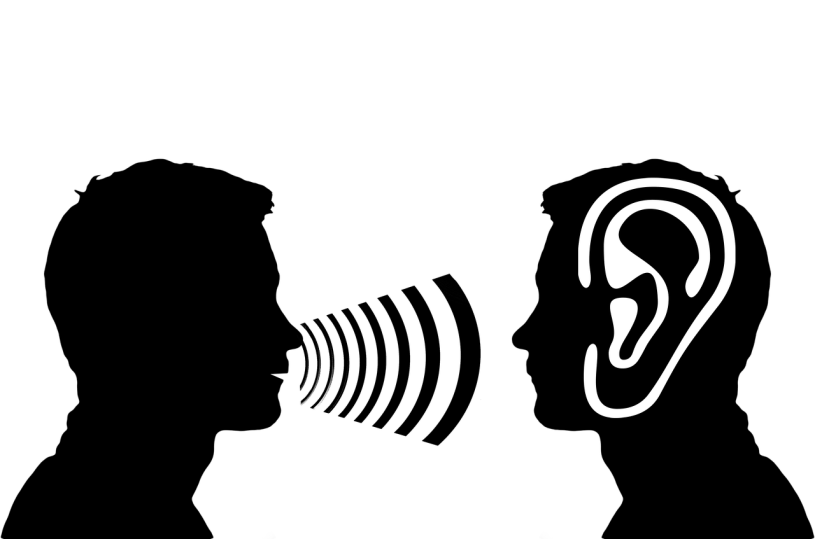
In this article, I want to help you understand why you need to pay much closer attention to what you hear in general, and how to pay attention to the Scriptures, so you don’t drift away from them.
Be Attentive to Your Thinking
Because our thinking, attitudes, beliefs, and desires are directly affected by what we think about the most, we must give the utmost attention to the messages we choose to ponder. As a caveat, the author of Hebrews is specifically referring to the gospel message that was taught his audience, but the instruction’s principle of attentive listening can be generally applied to everything we hear. First and foremost, we must be seeking helpful messages to hear. It’s not enough to just go on auto-pilot, and let whatever happens to come to our ears and eyes enter into our minds. The world around us is constantly trying to tempt us with the lust of the flesh, the lust of the eyes, and the pride of life. We live in an evil age, in which demonic forces are using wicked people to spew their foul messages of deceit, sin, and foolishness into our ears. And so believers, as those who have been given renewed hearts, and possess the Spirit within them, must be selective about what they give attention to.
Obviously, this requires much self-discipline, mainly in the area of thought-control. You as a believer have the ability and duty to “set your mind upon the things above,” and to “seek the things that are above” (Col. 3:1-3). As Paul again urges the Philippians in the fourth chapter of his letter to them, we must dwell on whatever is “good”, “just”, “lovely”, “of good repute”, “worthy of praise”, and “excellent”. As our thinking shapes our attitudes and affections, and our attitudes impel our outward behavior, it’s critical that we do our utmost to exercise self-control over our minds.
As many of us have ample time in which we aren’t wholly engaged with our minds in our activity, we usually have the opportunity to think about things other than what we’re doing. Of course, if what you’re doing requires your full attention, please focus on it exclusively. However, if you’re doing something that only requires some kind of rote repetition, or something less than your full attention, then is the time when your thought-discipline is put to the test.
As you should know already, we are called to live in the acknowledgement of the Lord as much as possible. As Proverbs 3:6 states, “in all your ways acknowledge Him”. Likewise, Paul famously commands, “pray without ceasing” (1 Thess. 5). Therefore, if we need to ask the Lord to help us do what we’re doing, it’s imperative that we spend as much time as necessary asking Him for that.
On the other hand, we should be constantly remembering what the Scriptures teach about the situations that we find ourselves in. This might not even directly apply to what we’re doing, but perhaps to what we plan to do later in the day, or what experiences we’ve already had. Regardless, we should regularly think about what situation the Lord has placed us in, so we can understand its nature, and what His Word requires us to do in it.
Finally, there are sometimes situations in which we don’t have any need to analyze our present situation, and we can ponder a subject that doesn’t directly relate to it. It’s in these times that it’s useful to have already engaged in diligent thinking on something, so we can then return to it, and further meditate on it. This is where attentiveness to our hearing is critical. It’s in such moments of thinking that we can determine how well we paid attention to the subject matter that will most benefit us in that moment, and perhaps pray about our response to it. It’s in such moments that our previous attention to the teachings of Scripture is proven to be good or poor.
Pay Attention to Your Hearing
Now, we come to the core of the issue I want to address. Because of our incessant reception of worthless information from the Internet and advertisements, many of us westerners have lost the ability to carefully evaluate the messages that come to our minds. This is where personal disciplined reading and study of Scripture and Christian teachings will help train our minds to focus on one idea at a time, and understand it in the light of what the Lord has already revealed to us. Further, a fresh and growing understanding of Scripture will allow us to determine if the messages we’re hearing are true or false, good or bad.
It’s critical that we’re constantly paying attention to what we learn from all the avenues of communication we use, so we accurately understand the situations we’re in. This is especially true when we’re getting messages from our fellow man, since we’re responsible to understand their condition as much as possible, and appropriately meet whatever need we see them have. For example, in his letter to the Colossians, Paul instructs his audience to, “walk in wisdom toward outsiders, making the most of the time; let your speech always be with grace, as though seasoned with salt, so that you will know how you should respond to each person” (Col. 4:5-6).
Let’s notice the progression from this instruction. He first says to use wisdom in our conduct with those outside of Christ. This will lead us to speak graciously to them, and then their response to our speech will enable us to decided how best to interact with them. What Paul is implying is that we must listen to them. Hence, it’s imperative that we pay close attention to what we hear people say.
Regardless of whether the messages are coming from flesh and blood individuals, online communications, or any other we encounter throughout the day, we need to pay more attention. We aren’t cogs in a machine, nor robots carrying out instructions regardless of our surroundings. We are intelligent and wise representatives of God that are called to think about what’s going on around us, so we can see the opportunities the Lord provides to make Him known, to do good for others, and to benefit ourselves.
Pay Much Closer Attention to What You’ve Heard from the Lord
The final, and most important, area I want to encourage you about, is your attention to God’s Word itself. To read, hear, or think about the truths of Scripture is to hear God’s very speech. Scripture is clear that all of it comes from God’s mouth, and therefore is the most important communication in your life, and in the universe (2 Tim. 3:16). The Scriptures are replete with descriptions of the truthfulness, usefulness, beauty, and almighty power of its messages. The Psalms declare that God’s Word is a “lamp to my feet, and a light to my path” (Ps. 119:105). A Psalmist boasts that His words are “sweeter than honey to my taste,” and that they are more precious than “many gold and silver pieces” (Ps. 119:103, 72). The Scriptures are the very “words of life,” as Jesus and His apostles described His own words (Jn. 6:68). Similarly, as previously referenced, Paul prominently expresses the Scriptures as “profitable for teaching, for reproof, for correction, for training in righteousness; so that the man of God may be adequate, equipped for every good deed” (2 Tim. 3:16-17).
It’s also promised that the Scriptures “restore the soul,” that they “make wise the simple,” and that they enable a saint to avoid “sinning against” the Lord if they’re “hidden in my heart” (Ps. 19; 119). Most importantly, the Scriptures “testify” of the Lord Jesus, and declare His “majesty” (2 Pe. 1:16). It’s through learning the Scriptures that we learn more about our glorious Savior – what He’s like, what He’s done, and what He will do. Thus, as we learn them more, we see more of His character, and are “transformed into the same image from glory to glory” as we “behold with unveiled face the glory of the Lord” (2 Cor. 3:18).
For all these reasons, and more, it’s imperative that we pay increasing attention to God’s Word, from wherever it comes. If we want to “live soberly, righteously, and godly in this present age,” and “try to learn what is pleasing to the Lord,” so we can “walk carefully, redeeming the time,” then we must read, study, understand, apply, and practice the teachings of the holy Scriptures (Tit. 3; Eph. 5). The best way to do this is through meditation, which I’ve already mentioned.
Simply put, meditation, as the Scriptures define it, is the careful, reverent, and prayerful pondering of any truth or idea, but especially God’s Word. In meditation on the Bible, you simply, but intensely, give focused attention to one or more passages, and remember over and over again what it says, until you understand it, appreciate it, and make a decision to do something in response. This last aspect could be any positive response, including praising the Lord for what He’s taught you. Regardless, meditation is an essential, but clearly neglected, discipline of God’s children, that we must cultivate and improve, if we want to understand God’s will for us, and overcome our besetting sins, false beliefs, and glaring errors.
Today, I urge you to resolve to pay more attention to what you think, what you hear, and to what you hear from God. Be like the Lord Jesus, who spoke and did whatever He heard His Father tell Him to speak and do.

