
All Scripture quotations are taken from the New American Standard Bible 1995 Ed. (NASB95)
In this world of distraction, selfishness, and pride, there’s often a tendency to focus on the interests of this world instead of those of God. This is true even if we are preoccupied by outwardly good things. Yet if good things take priority over the most important things, then we’re missing the mark, and seeking the values of our own earthly lives, rather than those of the coming eternal world. Peter fell into this trap when he insisted that Jesus must not die in Jerusalem, and said, “God forbid it, Lord!” (Mt. 16:22) What was Jesus’s reply? “’Get behind me, Satan! . . . for you are not setting your mind on God’s interests, but the interests of man’” (Mt. 16:23). May we be wary of falling into the same sin.
This is especially a danger when we think of our priorities regarding our community relationships. God has revealed that the most important group of people on earth is His Son’s body and bride – the body of Christ. He doesn’t say that the most important group of people is the family or household, but “the household of God” (Eph. 2). This has always been understood by God’s people, along with the conviction that the Lord uses households to compose, cultivate, and expand His Assembly (aka “Church”). In recent decades, through such ministry efforts as Focus on the Family, there’s been a needed push to equip believers to cultivate and enhance their families to conform with biblical standards. This has been going alongside the harmful individualism that pervades American and western societies. From these two contradictory philosophies come the same danger of forgetting our obligations and privileges as members of Christ’s body to devote ourselves to the equipping and building up of His household.
The Illustration of Haggai’s Day
The Book of Haggai provides us with a vivid picture of this danger to focus on our own households or individual lives to the neglect of the well-being and growth of our spiritual family. The first message disclosed by Haggai from the Lord is this:
“’Thus says the LORD of hosts, ‘This people says, ‘The time has not come, even the time for the house of the LORD to be rebuilt.’” – Hag. 1:2
Why were the people of Israel putting off the work on a new temple for God’s presence and worship? The Lord complains,
“’Because of My house which lies desolate, while each of you runs to his own house.’”
Is this not the condition of so much of Christ’s body in the West? It should be plain to see by anyone who looks carefully that the western part of the Assembly of Christ is in a state of declension, weakness, apathy, and compromise. Although there has been some recent revival and reformation in several sects of Christianity, the great bulk of western evangelical churches are still hindered and distracted by worldly and earthly ideals, mindsets, and practices. Most of them fail to consistently and carefully grow in their understanding and practice of New Testament teachings, and as a result, most of our Christian communities are filled with ignorance, sinfulness, and stagnation. This is the condition that the Jews were in at the time that they had just returned to Israel from captivity:
“Now therefore, thus says the LORD of hosts, ‘Consider your ways! You have sown much, but harvest little; you eat, but there is not enough to be satisfied; you drink, but there is not enough to become drunk; you put on clothing, but no one is warm enough; and he who earns, earns wages to put into a purse with holes.’” – Hag. 1:5-6
This woe for the Jews of Haggai’s days gives us a fitting metaphor for the miserable condition most western believers find themselves in, even if they’re unaware. Many of us have worked hard in an attempt to come to a fuller knowledge of God. This is the foolish plight of much of the evangelical, seeker-sensitive, mega-church, and charismatic worlds. In the popular American and western form of Christianity, it’s thought that the more emotional, exciting, and overwhelming our expressions of worship are, the closer we are to God. Yet we need to realize that no amount of emotional high or motivational speaking will give us a greater knowledge of God. This is how so many believers sow much time, effort, money, and other resources into things they believe will give them a greater experience of God, but ultimately come out no more obedient, joyful, and Christlike from their pains.
Something more specific could be said of most evangelical teaching in the West. Droves of Christians believe they are getting spiritual food from glorified motivational speakers, orators, and self-proclaimed teachers, but come away malnourished. This is often even true of believers who regularly imbibe sound Bible teaching. The reason for this is that if you’re seeking help from God’s Word to fulfill your own selfish and arrogant desires, then the Lord will not satisfy you with it. The Word is meant to “equip the saints for the work of ministry, to the building up of the body of Christ,” not so that you can simply feel better, be better at your selfish ambitions, or the like (Eph. 4:12). You must come to God’s Word with a heart eager to use it to instruct and encourage you in the service of your brothers and sisters in Christ. Just as the Jews in Haggai were unable to benefit from their various worldly pursuits, so we in our own day are often coming up short in our efforts to improve our lives.
Rebuild the Temple of the Lord
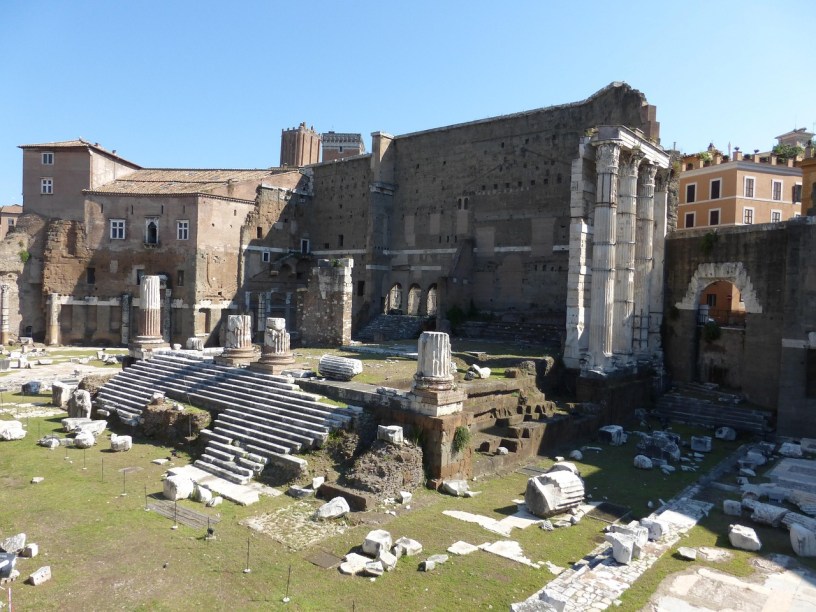
Another aspect of the situation of these Jews that is analogous to our own is that they had been commanded by the Lord to rebuild the temple. That is, at one time, it was standing, but was destroyed. Thankfully, this can never be true of Christ’s body as a whole, but it can come close to be true with smaller sections of the Assembly. I would especially apply this to those Christian fellowships that were established as a result of the Reformation and the Puritan revivals. Most of the Christian groups in the West are descended from these once-powerful and growing movements of believers, but are now ruins of the once glorious bodies. Hence, it’s time that we western believers recognize the wonderful heritage that we have, and strive to reclaim the biblical beliefs and practices of our forefathers. Yet, so many evangelicals think little to nothing of the Christianity that once thrived in America, Great Britain, and Europe. They are forgetting that their faith was not advanced to this point in history all of a sudden, without the determined work and hardship of thousands of brethren long ago.
When I say that God’s house should be “rebuilt,” I don’t mean that it should be made exactly the way it was in the days of the Reformers, Puritans, Methodists, and colonial Americans. We ought to take the biblical foundations and traditions that they lived by, and seek to expand and develop them into an even fuller expression of biblical Christianity. In going back to some of the examples of recent forefathers, we are seeking to get closer to the teachings and examples of the 1st century Christians following the apostles.
The Lord’s command to Haggai’s Jews is the same for us today – “’Consider your ways!’” (1:7)
We need to make a sober evaluation of the major faults and shortcomings of our Christian walks, and measure them against the perfect standard of the apostles’ teachings. And we need to see most of all that our devotion to the help, encouragement, instruction, and growth of our respective Christian brotherhoods is severely lacking. Most of our ineffectiveness at overcoming sin, learning God’s Word, and persuading sinners to believe the gospel is due to our inattention, apathy, and neglect toward the spiritual health of our closest brothers and sisters in Jesus.
Prioritizing the Body of Christ
Someone may say that I’m placing too much importance on the service of the holy and beloved brethren in Christ. But consider the amount of writing devoted to the instruction, encouragement, and correction of believers in the New Testament, and you’ll come away believing one of the top few priorities of Paul and the other apostles was loving and helping fellow believers. In comparison to this topic, there’s barely anything said of sharing the gospel, and fairly little said of individual, personal holiness. Most of the practical instruction in the New Testament is devoted to the treatment and relationships of the Christian community. Hence, it’s imperative that make the helping, service, and building up of our partner believers one of our top priorities as well.
What will it take for us to devote ourselves “to one another in brotherly love,” and to “consider one another more important” than ourselves? What will it take to use our individual giftings, resources, and abilities to seek out and meet the spiritual and physical needs of our brothers and sisters? Again, the Lord through Haggai gives us the answer:
“’Go up to the mountain, bring wood and rebuild the temple, that I may be pleased with it and be glorified . . .’” – Hag. 1:8
In the Old Testament, a mountain was most often the place where someone met with God. Think of Moses at Mt. Sinai, Abraham at Mt. Moriah, the Jews at Mt. Zion, and Elijah at Mt. Carmel. Hence, we could take this as a call to meet with the Lord in the most intimate way possible – prayer. It’s only through prayer that the Lord will grant us the spiritual and physical materials needed to engage in the glorious task of building up the saints.
But what specifically should we pray for? Besides all that’s generally needed to devote ourselves to our spiritual family, Haggai describes two prayer requests we should make. The first is found in the Jews’ response to the Lord’s command to rebuild the temple:
“And the people [feared before] the LORD.” – Hag. 1:12b
We first need such a fear for our majestic Lord and Savior that we will long for the Christlikeness and joy of our brethren in Christ. After all, Paul writes to the Ephesians to “be subject to one another in the fear of Christ” (Eph. 5:21).
A second work of God that’s mentioned by Haggai in this story is that
“. . . the LORD stirred up the spirit of Zerubbabel the son of Shealtiel, governor of Judah, and the spirit of Joshua the son of Jehozadak, the high priest, and the spirit of all the remnant of the people . . .” – Hag. 1:14
Out of our fear of God, and out of love for Him, our spirits ought to be stirred up to “consider how to stimulate one another to love and good deeds” (Heb. 10:25). As we pray for these attitudes and affections, we’ll increasingly grow in our love for the brethren, and increasingly use opportunities to encourage, serve, and comfort our fellow temple-members. And so we’ll be built up “until we all attain to the unity of the faith, and of the knowledge of the Son of God” (Eph. 4:13).
 BEARING CHRIST CRUCIFIED AND RISEN