
All referenced Scripture quotations are taken from the New American Standard Bible 1995 Ed. (NASB95) published by The Lockman Foundation
In western society, the month of October is used by most people to glory in the dark, evil, and simply supernatural things of human experience. It’s been duly observed that this post-Christian society has recently grown enamored and even obsessed with the spiritual world, including with the demonic. Paying homage to demonic, pagan, and supernatural forces has become a common part of our culture, since most people are opposed to biblical Christianity, but still recognize that the spiritual realm is active in everyday life. And what better way to celebrate the dark forces that rule over our society, then to set apart a day, and even a month, to put these powers on ostentatious display, and to participate in the lies that they propagate?
For a long time, many Bible-believing Christians have fallen into one of two ditches in their approach to confronting the celebration of Halloween. Some believers have chosen to compromise with the prevailing culture, and fully participate in the holiday. On the other hand, there’s too often been a major push to simply condemn everything that goes on with it as Satanic and demonic. I propose a more balanced viewpoint toward the subject. What if Halloween, and its attending activities, are ripe opportunities to preach and teach the truths of the gospel to lost, deceived, and perishing sinners? What if the very evil and darkness of this holiday is the thing that will allow the light of God’s Word to shine even more brightly, for the praise of God, and the salvation of unbelievers?
In this discussion, I want to show you a few ways in which we believers can rightly respond to Halloween, and bring the truth to bear on its pernicious lies and messages. The truth is, most people who celebrate it know not what they do, and are using it as a means of calming their fears, and pacifying their guilty consciences. They even do this while committing acts of rebellion and defiance against the Lord. However, we must remember that they’re doing this as slaves of sin and Satan, and that we possess the only message that can give them liberty, rest, and peace through God’s forgiveness.
Halloween is Horrible
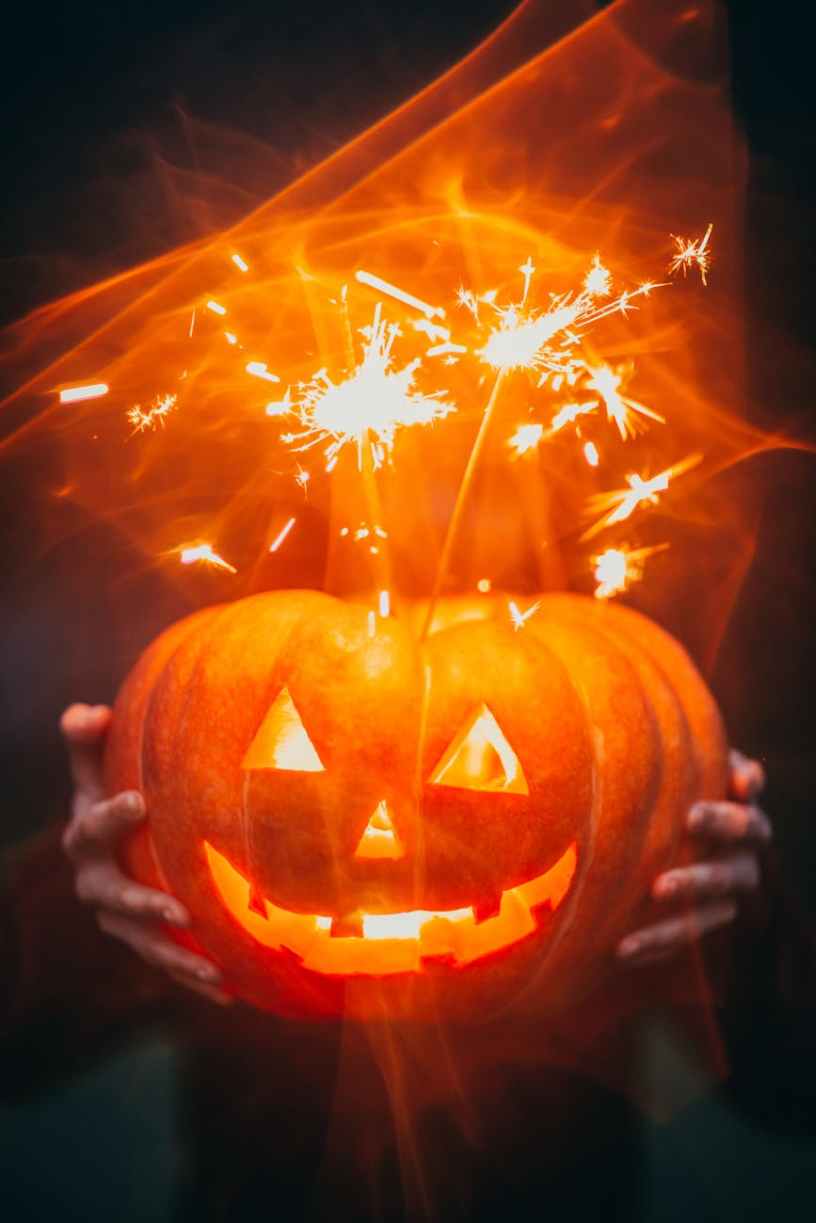
To begin our consideration of how we can wisely and lovingly respond to the celebration of Halloween around us, I want to simply paint a picture of what it basically is. Although some people have turned the holiday into a silly excuse for kids to play make-believe, and to get junk food from strangers, the holiday is largely evil, deceptive, and demonic in essence. If you think about how most adults celebrate it, you’ll see that this is clearly true. Most Halloween celebrants honor the holiday by decorating their homes and possessions with items used to provoke the imagery of haunted places, housing spiritual and supernatural beings. And if you’re a believer, you realize that the phenomena of hauntings and paranormal activity is usually just the work of demons. We know from Scripture that once people die, they go immediately to their holding place, whether heaven or hell, and no person stays on earth as a disembodied spirit. Most legitimate reports of spirits and ghosts are experiences of demons manifesting themselves.
Hence, the fact that people attempt to replicate the environments that demons often boldly display themselves in, and to provoke the feelings associated with experiencing them, shows that they want to experience demonic power — or at least what that power provokes within. Most Halloween celebrations are little more than a glorification and normalization of demonic activity. And this simply can’t be good in itself, no matter what excuses someone may give.
Along with the promotion of demonic activity, Halloween also clearly celebrates death, and the means to that end. This should come as no surprise, since Scripture says that Satan came only to “kill, to steal, and to destroy,” and he’s in the business of destroying people’s souls, if not their bodies. One of the other main themes of Halloween decorations is the cruel and horrible methods used by demonically-influenced forces to kill people. Just think of the countless displays, statues, pictures, and costumes that picture killers, murder victims, and weapons.
The question that should be raised to people who glorify killing and death for Halloween is “why?”. Why do you want to frighten yourself with the terrifying possibilities of being killed and/or tortured? The answer is mostly found in this profound statement written by the author of Hebrews:
“. . . through death He might render powerless him who had the power of death, that is, the devil, and might free those who through fear of death were subject to slavery all their lives.”
– Heb. 2:14b-15
This passage clearly tells us that all who are enslaved by the devil and death are tormented by the “fear of death”. All reasoning people, regardless of the self-deceptions they may use to bury their fears, are afraid to die. Why? Because they have an innate sense of right and wrong, and know their Creator will hold them accountable for their guilt of violating His standard. They know their punishment awaits them when they die, so the thought of dying naturally terrifies them.
Thus, we have our answer for why people normalize death and dying on a regular basis. It’s an attempt to make death appear less destructive and hellish than it really is. It’s a futile effort to prepare themselves to face their Creator in judgment, when they have already been judged guilty and condemned to the suffering they deserve for their rebellion. Therefore, when people attempt to experience a simulation of dying and death through Halloween images and activities, they are usually engaging in a self-deception, which at times can dull their sense of the terrifying prospects of the ending of their lives. So, the devil can use it to make people believe their deaths won’t earn them the horrific consequences that truly await them if they die as unbelievers.
For these two reasons alone, I conclude that Halloween at heart is a deceptive and destructive holiday, which shouldn’t be commended or approved of in its normal celebration. Rather, we believers ought to use the darkness that’s promoted as a God-given opportunity to show and speak the teachings of God’s Word on these subjects. And I’d like to give you a few practical questions that you can ask as you interact with people who are celebrating Halloween, so you can cause them to think about the truths of the gospel that speak directly to the messages they’re thinking about.
Hold Out the Truth to Halloween People
There are at least a few good questions we can ask people when we learn that they’re participating in the normal celebrations of Halloween. The first has already been discussed, but it bears repeating, since it’s one of the best questions to ask people when seeking to draw their attention to the saving work of Jesus. This question is the one about everyone’s fascination with death. If you notice someone making death seem glamorous or enjoyable in some way, be loving enough to ask them, “why do you celebrate death?” You can also explain to them that death takes away what most people love (which is everything they enjoy in the world), so it’s contradictory to celebrate it. If you know that death is your greatest enemy, then why would you make it seem like a benefit to your life, and a source of pleasure? Such a question can expose one of the underlying problems in an unbeliever’s thinking – that death is coming to deprive me of my earthly joys, and I don’t know what to do about it. And what is the solution to death, and to fearing it? The life, death, and resurrection of the Savior, and His promise of eternal life for all who trust in Him.
Another good question to ask celebrants of Halloween concerns people’s glamorization and praise of evil characters, such as the demonic, monsters, and villains. The holiday is notorious for celebrating the harmful and death-dealing works of evil persons, such as criminals, vampires, witches, warlocks, and so on. The question that should be raised in the face of this insanity is “why”?. Why would we celebrate characters and beings that destroy people? Why would we try to make them seem as if they offer some benefit to us? The usual reason for why people do this is the same for why they glorify death. It’s because they’re afraid of the supernatural forces they know pervade our world, and they want to experience their power in some way, so they can feel less afraid, or even find some way to ignore the mysterious and destructive powers that the supernatural have over them.
Asking such a question will immediately beg the question of why should we be afraid of evil persons? Why should we be afraid of evil itself? And what makes something evil? Who is the one defining what evil is, and what good is? All these questions are answered by the Bible’s message of salvation through the Lord Jesus. We downplay evil because we know that we are participating in evil, which mars our consciences. But we must acknowledge evil and sin for what they are, and recognize that we naturally are individual villains and criminals against our Creator. But Jesus came to provide forgiveness for these things, and also to transform us into those who love what is good, and who hate evil.
A final question we can ask is very simple, but can easily lead to an opportunity to explain the gospel of Jesus. You can ask, “why are we so enamored and fascinated with supernatural forces”? This fascination betrays underlying presuppositions that fly in the face of most western people’s worldviews. Many unbelievers have bought into the lie that we live in a materialistic, mechanical, physical, and non-spiritual universe. They deny that spirits exist, and doubt whether people even possess souls. However, the intense interest in the supernatural phenomena that have been experienced for all human history, down to the present day, shows us that people are innately aware of the invisible, spiritual, realm. All people naturally know that the stuff that’s experienced with our physical senses is only a part of the story. Most importantly, according to Romans 1:18 and following, all rational people are innately aware of the presence and work of the spiritual, infinite, Creator. Likewise, people realize that there are invisible forces at work in the world, besides those directly from the power of God.
Further, most people who sense the workings of supernatural forces realize that many of these forces are hostile towards people, and work to harm them. From this fact, it can be deduced that there’s some kind of conflict going on in the spiritual realm, with evil opposing good. At this point in the discussion, we can do well to ask our unbelieving friend, “So which side are you on?” And this is one of the crucial questions, since its answer spells out humanity’s whole dilemma in sin, and invites the help of the good news of peace through Jesus Messiah. We must tell people that there’s indeed a spiritual war going on, and they need to desert their doomed master, and submit to the reign of King Jesus, who died to pay their debt, and reconcile them to God.
Make Halloween Holy
The bottom line is this – although Halloween is a deceptive and dark celebration of the chief enemies of man, believers have a great opportunity through it to present the truth and light of the gospel. The next time you encounter someone who is celebrating this holiday, or any of its elements, be bold to explain the truth to them. They’re likely ignorant and deceived, not understanding the full horror of death or the spiritual realm. They must be shown that “to those who sit in darkness and the shadow of death, upon them a Light dawned,” and that God has “abolished death and brought life and immortality to light through the gospel” (Is. 9:2; 2 Tim. 1:10). They often don’t realize that they’re enslaved to the devil, and that Jesus has provided the way of deliverance and freedom through His death and resurrection. Hold forth the word of the gospel in the midst of darkness, and expose the works of darkness, so that people can become children of light! In this way, you can “hallow,” or “set apart,” this most impure of holidays.
 BEARING CHRIST CRUCIFIED AND RISEN